
Report from IRNOP Project research conference in Delft, Netherlands
Report from IRNOP Project research conference in Delft, Netherlands
Hopeful projects in response to radical uncertainty
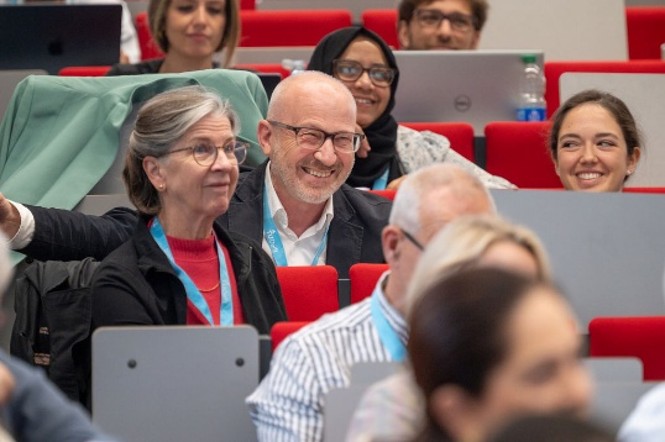
The conference took place in the Delft University of Technology (TU Delft), with contributions from four faculties — Architecture, Civil Engineering, Policy & Management, and Industrial Engineering The conference theme was “Hopeful projects in response to radical uncertainty”. It was great to meet more than 120 project researcher friends from all over the world. As the conference is small, there is time to connect with most participants both in the paper presentations with discussions, and informally.
Projects to tackle grand challenges
Several presentations discussed pros and cons with projects to tackle grand challenges involving global health, sustainability and development problems. Hope is key in these initiatives to keep moving through obstacles and setbacks. One aspect here is that the temporary project work is combined with permanent focus, to be able to re-use results in a wider sense. We discussed in groups if this is a sign of de-projectification but the conclusion in our team was that the project format is adapting and we tone up relevant parts and combine them with a longer view. This was stressed in the best paper of the conference by Joana Geraldi and Johann Packendorff. They used a metaphor of the Cherry tree that is permanent, lasting centuries. Its flowers are beautiful but last only weeks every spring. While different the tree and flowers are also co-dependent.
Impact beyond hope-driven projects
Liselore Havermans held the keynote speech, Impact beyond hope-driven projects- Navigating uncertainty for societal impacts, where she pointed out that societal impacts at large scale requires:
• An effective tandem between temporary projects, programs and evolving ecosystems
• Continuously navigating uncertainty with hope as a driving force
• Blazing a trail to facilitate others to walk it with you by shaping the narrative, raising the standard, sharing insights, collaborating and taking away hurdles along the way
Liselore gave us a lot to think about. In Netherlands there is a need to accelerate delivery in the construction sector for housing by a factor of 2-3 times. 100 000 new houses are needed per year, 8 million houses needs to be decarbonized and 80 000 bridges need to be renovated. The aims are also challenging
• To significantly reduce emissions by 2030 (-40% of total CO2 emissions)
• A climate resilient built environment
• 50% circular by 2030 and 100% circular by 2050
Liselore concluded that we need to change the narrative from Hope is not a strategy to Hope might be the best strategy.
Leadership in relation to critical events
Anna Jerbrant spoke about Leadership in exploratory projects based on a large change initiative SIRI within KTH, Sweden. She has found 6 critical events (unforeseen emergency or crises that disrupts) during the program. Each of these critical events led to different coping mechanisms.
“In SIRI leadership changed after critical events, not according to predefined phases. After critical events, the form, location and orientation of leadership shifted, not according to plan, but in response to how actors made sense of what had happened”.
In the study four different coping strategies/responses where identified. Commitment, negotiation, compliance, disengagement. I like the critical events term as a way of understanding the situation but also as an approach to see and adapt the leadership and management of the project instead of postponing to the pre-planned stages. It can also be useful in retrospective/lessons learned sense even if the coping strategies will differ case by case.
Reflect on what the critical events in your last project or program? Do you have a critical event in your project or program right now? What coping mechanisms were/are used?
The massive Amsterdam Bridges and Quay Walls Programme
The final activity of the conference was to visit the Amsterdam Bridges and Quay Walls Programme. A massive undertaking to renovate 900 of Amsterdam’s bridges and 475 Km quay walls. There is a huge maintenance backlog and the bridges and quay walls are impacted by much heavier vehicles than they were designed for. The urgency to fix this increased on September 1, 2020, when part of the quay of the Grimburgwal in Amsterdam collapsed. Back then the belief was that most of the bridges and quay walls needed urgent renovation. After thorough investigation and tests, it is clear that the remaining service life is on average much longer than previously thought. The old building
techniques like timber founded quay walls is still rather good even if they are old. This means that they now can prioritize and plan better. It means more predictive maintenance and repairs, less disruption, preservation of heritage and reduced use of raw materials.
For you that visit Amsterdam you need not worry about bridges and quay walls collapsing as they monitor them closely, also from satellites in space. The program insights and results are relevant beyond Amsterdam as many countries and cities (like Gothenburg where I live) have similar constructions.
The attraction of hopeful projects
One final thing that was mentioned at the conference is that hopeful projects with a heartful meaning attracts young talented persons, is that not a good sign!
A big thanks to the organising committee that arranged the conference in such a warm and informal way.
Mats Ragnarsson Consultant Wenell Management and member of the Swedish Project Academy.