
Podcast about nontechnical challenges in projects with Ebba Karlsson & Julia Lyxell Stålnacke: One of the two winners of the Swedish Project Academy’s Thesis of the year award 2026.
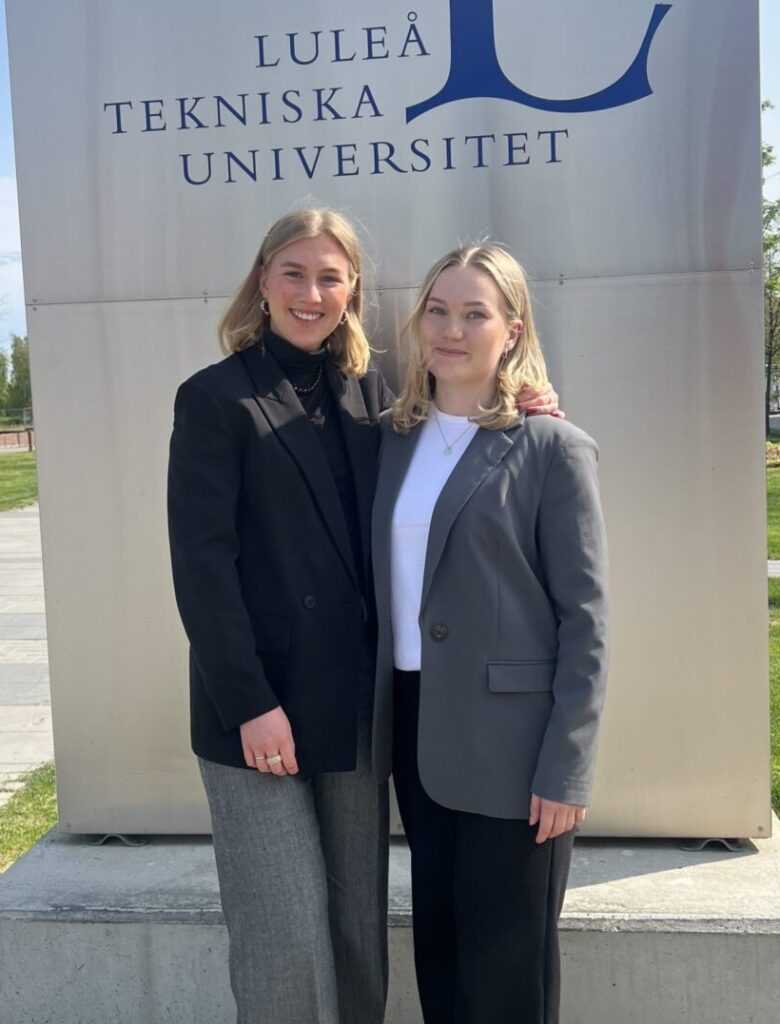
Podcast about nontechnical challenges in projects with Ebba Karlsson & Julia Lyxell Stålnacke: One of the two winners of the Swedish Project Academy’s Thesis of the year award 2026.
Click here to listen to the interview here
Mats Ragnarsson Wenell Management interviews Ebba and Julia about their winning thesis Attention Please! A Study of NonTechnical Challenges when Scaling Greenfield Projects.
A Greenfield project is project, where you build everything from scratch, organization, systems, routines and organization. The results of the thesis with a focus on non-technical challenges are relevant regardless of if you work in these fundamental projects or in projects building on existing structures (brownfield projects). The management of the non-technical challenges is crucial but is often overshadowed by the technical challenges.
“The starting point of our work is the attention-based view, which is based on the premise that attention is a limited resource. We have studied what the case project focuses on in different phases in relation to how important this is.”
What do you put your attention on in your project? What should you pay attention to?
Link to the thesis
The Swedish Project Academy’s motivation for the win
The Swedish Project Academy is pleased to present the 2026 winners of the annual thesis competition that highlights issues of relevance to projects, project management and project-based activities.
Ebba Karlsson & Julia Lyxell Stålnacke, Luleå University of Technology, are awarded the prize for Attention Please! A Study of NonTechnical Challenges when Scaling Greenfield Projects. In a time of European reindustrialization and green transition, the study addresses one of the most underestimated challenges in large-scale projects: that the non-technical issues are systematically pushed aside by the technical focus.
Through a methodologically unusually ambitious combination of in-depth interviews, the Delphi method and the Q method, the authors identify 33 non-technical challenges and show how decision-makers’ attention is distributed – and where it is not enough. The concrete AP framework provides organizations with a directly useful tool to prioritize the right issue at the right time along the scaling journey.
Note that this year, for the first time in the competition’s history, the Swedish Project Academy has decided to award the thesis prize to two winners. The jury conducted several deliberations but found it impossible to separate the two finalists – both in their own way represent the best in contemporary research on project management: methodologically ambitious, theoretically innovative, and with clear practical relevance for project-based organizations. It is a unique decision in this context, but one that the jury is unanimous on.